
How bringing it back into modern homes has been a helpful addition
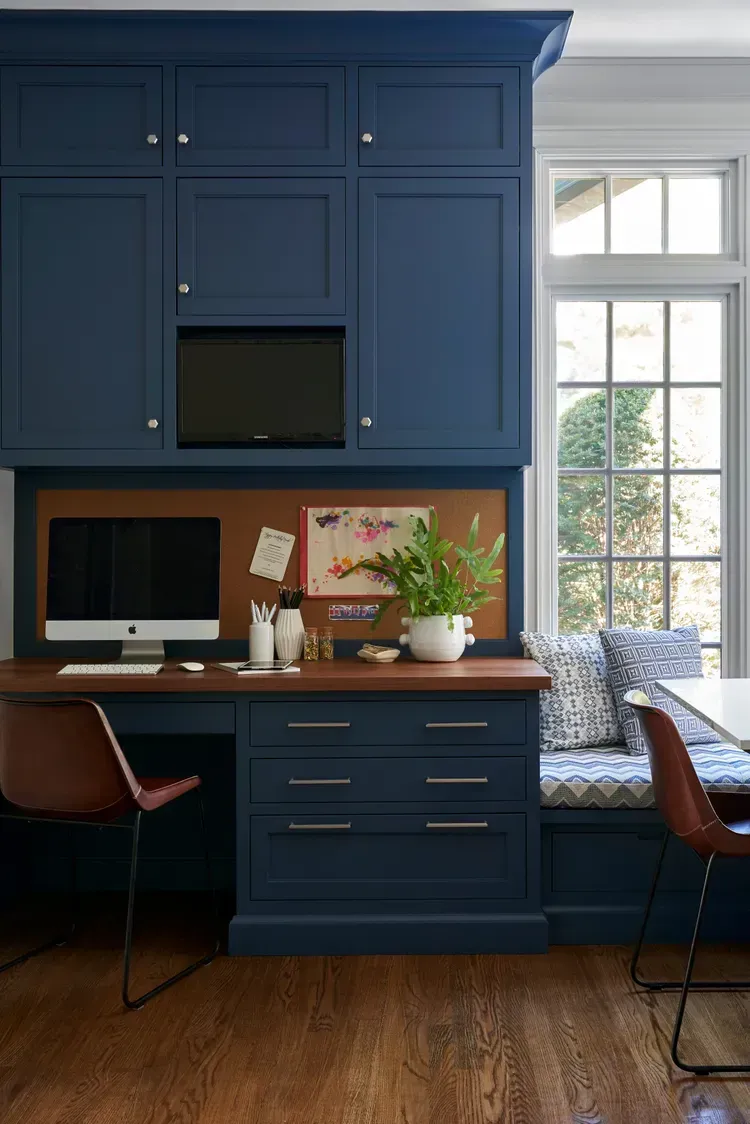
Photo Credit: James Nathan Schroder
"A staple fixture in kitchens from the '90s and early aughts, built-in kitchen desks were once a place to house the family desktop computer. And though they have recently been considered a dated feature, the kitchen desk is entering a new era. Not every home has an office, but everyone has mail, devices, and lives to keep in order.
Not only are more people working from home these days—requiring an extra work station or a central hub for devices and charging cords—but modern households still need a place to write birthday cards and grocery lists. The kitchen desk of today is just as practical as those of the past, but with more streamlined design and updated functions.
Interior designers share how modern families are using kitchen desks and what to consider if you're thinking of adding one to your space.
Home Admin and Device Storage
Though the practical uses for the kitchen desk have changed, there are a few key factors contributing to their resurgence. There’s still a need for an organizational hub in today’s homes, and the kitchen is a logical choice of location. “The kitchen is where life lands,” says Jackie Young of JMY Interiors. “Mail, keys, backpacks, chargers, school papers, packages—the kitchen is where you pause for a second and drop whatever’s in your hands.”
Flexible Work Space
In the modern era, many people need flexible work space given the prevalence of remote work. Maybe one partner only works from home some days, or you don't have a traditional home office. This can also be an ideal spot for a homework station or a place to review recipes. “These desks offer a versatile landing spot that adapts to flexible schedules and varied work styles,” Rideau says. “Whether it’s for creative projects, remote tasks, or simply a quiet place to focus, having the right desk can make all the difference in productivity and comfort.”
Choose the Right Location
Locate your kitchen desk outside of the major work triangle and any major traffic paths through the kitchen. If you plan to work at the desk for any length of time, you'll want to be somewhat out of the way. Similarly, you don't want a pile of homework in the middle of your cooking flow.
Another location consideration is how to get the most use out of your desk area. Young recommends pairing the desk with a beverage center to increase utility and limit clutter.
Consider Counter Height
Designers agree, a counter-height kitchen desk (36 inches from the floor) makes the most sense. This is a shift from shorter, table-height desks of the past. A counter-height desk allows you to match the desk chair or stool that of your island, creating a seamless look. This setup also offers great versatility. “It can easily double as extra prep space when entertaining guests," Rideau says.
Add Functional Storage and Charging
The function of the kitchen desk will differ for everyone, but may include a place to sort mail, a place to drop keys or other daily essentials, a place to charge devices, and a place to get some work done.
Charging capabilities will probably require the most forethought and planning. "Providing power with flush outlets or USB ports concealed under cabinets is non-negotiable," Young says. If you're retrofitting an existing area, you can purchase a streamlined charging station and store it on the countertop or install it under the cabinets.
When it comes to other storage and overall design, treat the kitchen desk as part of the whole kitchen, with matching cabinetry and hardware. Custom millwork or cabinets could help improve organization and give the kitchen desk a pleasant, intentional look."